In today’s fast-paced world, technology is constantly changing, and it’s important to keep up with the latest trends.
A Step-by-Step Guide to Build AI/ML Based Custom Trading Platform
- Published on: February 12, 2026
The global financial ecosystem is undergoing a structural shift driven by Artificial Intelligence (AI), Machine Learning (ML), and real-time data engineering. Traditional rule-based trading systems are rapidly being replaced by intelligent, adaptive platforms capable of predictive analytics, sentiment analysis, and autonomous execution.
For fintech startups, hedge funds, brokerage firms, and institutional investors, building an AI/ML-based custom trading platform is no longer optional; it is a strategic advantage.
In this comprehensive guide, we break down the technical, architectural, regulatory, and operational steps required to build a scalable, secure, and AI-powered trading platform from concept to deployment.
Why AI/ML is Transforming Trading Platforms?
Before diving into development, it’s important to understand why AI/ML integration is critical in modern trading systems.
Key Benefits of AI/ML in Trading:
- Predictive analytics for price forecasting
- Automated algorithmic execution
- Sentiment analysis from news & social media
- Risk modeling & portfolio optimization
- Anomaly detection & fraud prevention
- High-frequency trading (HFT) strategies
AI-driven platforms can process millions of data points per second, something human traders simply cannot match.
Moreover, the emergence of Agentic AI introduces autonomous trading agents capable of decision-making, self-learning, and strategy evolution with minimal human intervention. This marks the next evolution in algorithmic trading systems.
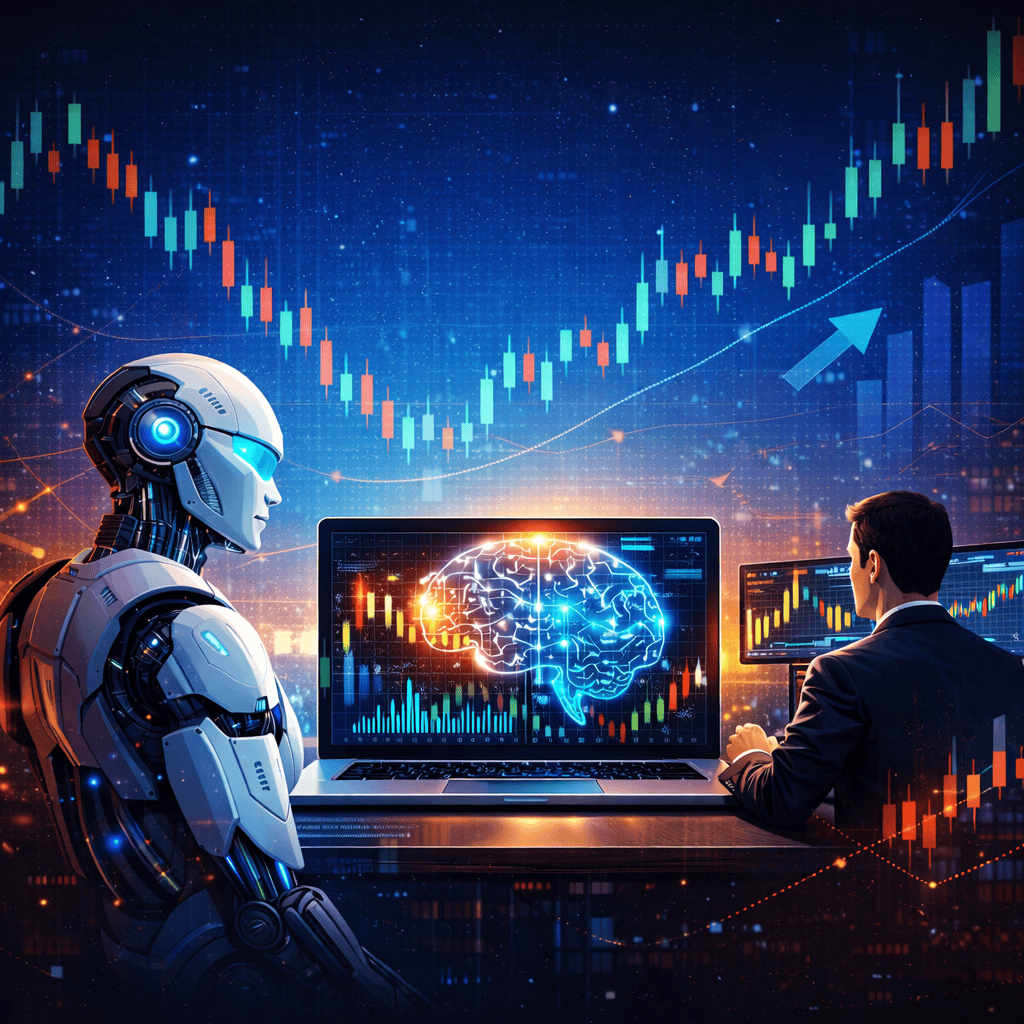
Step-by-Step Guide to Build an AI/ML-Based Custom Trading Platform
Step 1: Define Business Objectives and Trading Strategy
The foundation of a successful AI trading platform begins with clarity.
Identify Your Trading Model:
- Equity trading
- Forex trading
- Crypto trading
- Commodities
- Derivatives
- Multi-asset trading
Define Core Objectives
- Retail vs institutional focus
- Short-term vs long-term strategies
- Automated vs semi-automated trading
- Risk tolerance levels
- Compliance requirements
Your AI model architecture, infrastructure, and scalability decisions will depend on these early-stage choices.
Step 2: Market Research & Regulatory Compliance
Financial markets are heavily regulated. Your platform must comply with:
- SEBI (India)
- SEC (USA)
- MiFID II (Europe)
- FINRA
- GDPR for data privacy
Compliance impacts:
- Data storage policies
- Audit trails
- Transaction transparency
- Risk disclosures
- KYC/AML workflows
Step 3: Choose the Right Technology Stack
Backend Technologies:
- Python (AI/ML modeling)
- Node.js
- Java (low-latency systems)
- .NET Core
Frontend Technologies:
- React.js
- Angular
- Vue.js
AI/ML Frameworks:
- TensorFlow
- PyTorch
- Scikit-learn
- XGBoost
Data Engineering Tools:
- Apache Kafka (real-time streaming)
- Spark (big data processing)
- Redis (caching)
- PostgreSQL / MongoDB
Cloud & DevOps:
- AWS / Azure / GCP
- Kubernetes
- Docker
- CI/CD pipelines
Step 4: Data Collection & Data Engineering Pipeline
Types of Data Required:
- Historical market data
- Real-time tick data
- Order book data
- Economic indicators
- Financial statements
- News feeds
- Social media sentiment
Data Architecture Flow:
- Data ingestion (APIs, feeds)
- Data cleaning & normalization
- Feature engineering
- Data warehousing
- Real-time streaming integration
Step 5: Design and Train AI/ML Models
Popular AI Models Used in Trading:
- Time-series forecasting (ARIMA, LSTM)
- Reinforcement Learning
- Deep Neural Networks
- Random Forest
- Gradient Boosting Models
- Sentiment Analysis (NLP)
Model Development Lifecycle:
- Data preprocessing
- Feature selection
- Model training
- Backtesting
- Hyperparameter tuning
- Performance validation
Performance metrics include:
- Sharpe Ratio
- Alpha & Beta
- Maximum Drawdown
- Precision & Recall
- ROC-AUC
Step 6: Backtesting & Strategy Optimization
What to Evaluate:
- Profitability consistency
- Risk-adjusted returns
- Drawdown tolerance
- Transaction costs impact
- Slippage modeling
You should test across:
- Bull markets
- Bear markets
- Sideways markets
- High volatility periods
Step 7: Real-Time Execution Engine Development
Core Components:
- Order Management System (OMS)
- Execution Management System (EMS)
- API integrations (brokers/exchanges)
- Risk management module
- Real-time monitoring dashboard
Step 8: Risk Management & Portfolio Optimization
AI-Driven Risk Controls:
- Dynamic stop-loss adjustments
- Position sizing algorithms
- Portfolio diversification models
- Real-time margin calculation
- Exposure monitoring
Step 9: Security Architecture & Data Protection
Essential Security Measures:
- End-to-end encryption
- Multi-factor authentication
- Role-based access control
- DDoS protection
- Secure APIs
- Audit logs
- Blockchain-based ledger (optional)
Step 10: UX/UI for Traders & Admin Panel
Key User Features:
- Real-time charts
- Strategy builder interface
- Custom dashboards
- Alert systems
- Trade history tracking
- Risk analytics visualization
Admin panel features:
- User management
- Compliance monitoring
- Performance reports
- Model performance logs
- KYC/AML management
Step 11: Deployment & Cloud Scalability
Cloud Architecture Considerations:
- Auto-scaling groups
- Load balancing
- Distributed databases
- Container orchestration
- Real-time failover systems
Step 12: Continuous Monitoring & Model Retraining
Post-Deployment Processes:
- Drift detection
- Model retraining
- Performance monitoring
- Latency tracking
- Real-time alerting
- Automated testing pipelines
Advanced Considerations for AI Trading Platforms
Integration of Alternative Data:
Modern AI trading platforms leverage:
- Satellite imagery
- Credit card transaction data
- Weather data
- Consumer sentiment data
Alternative datasets improve predictive accuracy significantly.
Multi-Asset & Cross-Market Strategy Engine
Institutional platforms often require:
- Cross-asset arbitrage
- Global market connectivity
- 24/7 monitoring
- Multi-currency support
Scalable architecture is essential for such complexity.
Cost of Building an AI/ML Trading Platform
Costs depend on:
- Feature complexity
- AI model sophistication
- Data licensing
- Cloud infrastructure
- Compliance requirements
- Security layers
A mid-scale AI trading platform may range between $60,000 to $250,000 depending on scope.
Many fintech companies strategically Hire dedicated developers from India to optimize development costs while maintaining enterprise-grade quality.
Why Partner with an Experienced Product Engineering Company?
Building an AI/ML-based custom trading platform requires:
- Financial domain expertise
- AI/ML proficiency
- Real-time systems engineering
- Security architecture
- Regulatory compliance knowledge
A specialized Product engineering company ensures:
- Architecture scalability
- Model accuracy
- Infrastructure resilience
- Faster time-to-market
- Continuous innovation
Organizations looking to accelerate innovation often choose to Hire dedicated teams for agile development, ensuring sprint-based iteration, rapid prototyping, and continuous delivery.
The Role of Agentic AI in the Future of Trading
Agentic AI is redefining algorithmic trading.
Unlike traditional ML systems, Agentic AI:
- Makes autonomous decisions
- Learns from execution outcomes
- Adapts strategies dynamically
- Minimizes human intervention
- Improves over time
This represents the next frontier in AI-driven capital markets.
Final Thoughts
Building an AI/ML-based custom trading platform is a complex but highly rewarding endeavor. It requires:
- Strong data infrastructure
- Advanced AI modeling
- Low-latency execution engines
- Robust risk management
- Enterprise-grade security
- Regulatory compliance
The financial markets of tomorrow will be dominated by intelligent systems capable of processing real-time insights and acting autonomously.
If your organization is planning to build a next-generation trading platform, partnering with a Leading ai and machine learning development company ensures strategic advantage, technical excellence, and long-term scalability.
By combining AI innovation, financial engineering, and agile development practices, businesses can build resilient, intelligent trading platforms that outperform traditional systems consistently and sustainably.
FAQs
1. How long does it take to build an AI/ML-based custom trading platform?
The development timeline depends on platform complexity, AI sophistication, regulatory requirements, and infrastructure architecture.
- Basic MVP (limited AI + single asset class): 4–6 months
- Mid-scale platform (multi-asset + advanced ML models): 6–9 months
- Enterprise-grade institutional system: 9–15+ months
A structured roadmap, sprint-based execution, and experienced engineering teams significantly reduce development cycles. Many fintech startups accelerate timelines when they Hire dedicated teams for agile development, ensuring faster iteration and continuous integration.
2. What is the difference between traditional algorithmic trading and AI-based trading?
Traditional algorithmic trading relies on rule-based logic — predefined instructions like “buy when RSI < 30.”
AI-based trading platforms use:
- Machine learning models
- Predictive analytics
- Reinforcement learning
- Natural language processing
- Adaptive strategy optimization
AI systems evolve based on data patterns, whereas traditional algorithms follow static conditions. Advanced platforms now integrate Agentic AI, which enables autonomous strategy refinement and self-optimization.
3. What are the key challenges in building an AI trading platform?
Building an AI/ML-based custom trading platform involves multiple technical and regulatory challenges:
- Data quality and availability
- Latency optimization
- Overfitting in ML models
- Regulatory compliance (SEBI, SEC, MiFID)
- Cybersecurity risks
- Real-time risk monitoring
- Infrastructure scalability
Partnering with a Leading ai and ml development company helps mitigate these risks through proven architecture frameworks and fintech domain expertise.
4. How much does it cost to build an AI/ML trading platform?
The cost varies based on:
- AI model complexity
- Data licensing requirements
- Real-time processing infrastructure
- Compliance implementation
- UI/UX sophistication
- Security architecture
Typical cost range:
- MVP version: $60,000 – $100,000
- Mid-scale platform: $100,000 – $180,000
- Enterprise institutional system: $200,000+
Organizations often Hire dedicated developers from India to optimize development budgets while maintaining enterprise-grade engineering standards.
5. What AI models are commonly used in trading platforms?
Popular AI/ML models in financial trading include:
- LSTM (Long Short-Term Memory) for time-series forecasting
- Reinforcement Learning for dynamic strategy execution
- Random Forest & Gradient Boosting for predictive modeling
- Deep Neural Networks for pattern recognition
- NLP models for sentiment analysis
Advanced platforms combine multiple models into hybrid AI systems to improve prediction accuracy and reduce market noise impact.
6. Is regulatory compliance mandatory for AI-based trading platforms?
Yes. Regulatory compliance is non-negotiable.
Depending on your geography and asset class, compliance may involve:
- KYC/AML verification
- Audit trails
- Transaction transparency
- Risk disclosures
- Data protection laws (e.g., GDPR)
An experienced Product engineering company ensures compliance frameworks are embedded into the system architecture from the initial development stage.
7. How important is real-time data processing in AI trading systems?
Real-time data processing is critical, especially for:
- High-frequency trading
- Intraday algorithmic trading
- Arbitrage strategies
- Volatility-based trading
Millisecond-level latency can impact profitability. A robust real-time streaming pipeline using tools like Kafka and Spark ensures high-speed decision execution.
8. Can AI trading platforms fully replace human traders?
AI trading platforms can automate execution, prediction, and optimization. However:
- Human oversight remains crucial
- Risk supervision is essential
- Regulatory accountability requires governance
The future lies in human-AI collaboration, where AI enhances precision and humans provide strategic direction.
9. What security measures are essential in AI trading platforms?
Security architecture should include:
- End-to-end encryption
- Multi-factor authentication
- Secure API gateways
- Role-based access control
- DDoS mitigation
- Continuous vulnerability scanning
Financial systems require DevSecOps integration from early development stages to prevent breaches and data compromise.
10. Why should businesses outsource AI trading platform development?
Outsourcing provides:
- Access to specialized AI/ML talent
- Faster go-to-market strategy
- Cost optimization
- Scalability flexibility
- Dedicated agile teams
Companies that Hire dedicated developers from India gain access to skilled fintech engineers at competitive costs without sacrificing quality or security standards.